

You decorate for holidays because you’re wiring your home with hope when darkness feels heaviest. Those twinkling lights? They echo ancient candles symbolizing divine guidance. Your evergreens signal that life persists through harsh winters. Family ornaments anchor memories year after year, telling your story through objects you touch and treasure. You’re also signaling warmth to neighbors, strengthening community bonds one display at a time. Decorating isn’t just pretty—it’s how you prove belonging matters. The practice connects centuries of tradition with your family’s resilience.
Why Decorations Feel Essential When Days Get Dark
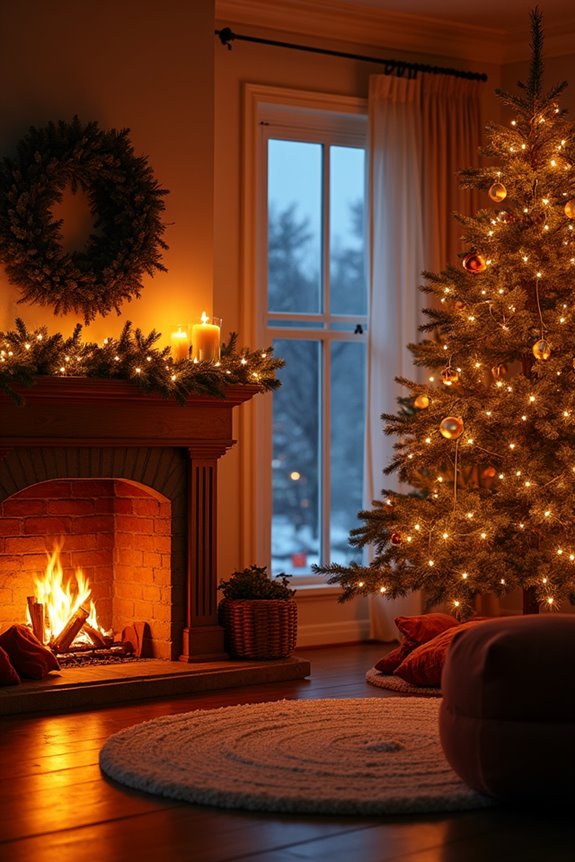
Why do we suddenly feel the urge to string lights and hang garland when the sun disappears earlier each day? You’re tapping into something ancient and powerful. Holiday decorations aren’t just pretty—they serve a real purpose during winter’s darkness. Throughout history, cultures have used lights and evergreen plants to symbolize renewal and enduring life when days grow short. You instinctively know this. When you hang those twinkling lights on your porch, you’re not just brightening your home; you’re brightening your spirit. The glow reminds you and your neighbors that life continues, that better days return. Those evergreens promise growth ahead. Your decorated home becomes a beacon of hope in the darkness, signaling that life persists and renewal is coming. That’s why decorating feels necessary, not optional.
The Psychology Behind Why Holiday Displays Signal Warmth
Beyond just lifting your own spirits, those holiday decorations you’ve hung are actually sending a powerful message to everyone around you. Your displays signal warmth and openness to neighbors, inviting connection even when you’re naturally quieter. Well-maintained decorations with visible signs of life—like lit windows and footprints in the snow—strengthen this welcoming effect.
| What You Display | What Neighbors See | Connection Impact |
|---|---|---|
| Thoughtful lights | Warmth and care | Increased friendliness |
| Neat wreaths | Attention to detail | More approachable vibe |
| Visible daily life | Someone home and present | Stronger belonging signals |
| Neglected decorations | Less intentional effort | Weakened social connection |
You’re communicating, “I’m here, I care, let’s belong together!” These decorations bridge gaps between isolated homes, helping you signal hospitality and community involvement without saying a word.
What Evergreens and Lights Have Meant Across Cultures

Have you ever wondered why we’re drawn to green branches and glowing lights when winter arrives? You’re tapping into traditions that span centuries and continents!
When you decorate with evergreens and lights, you’re joining millions who’ve found meaning in these symbols:
- Evergreens represent life persisting through harsh winters, connecting us to ancient European solstice celebrations
- Lights symbolize hope shining in darkness, a beacon guiding us through winter’s bleakest days
- The star atop trees echoes Nativity themes across many cultures, representing divine guidance
- Regional adaptations—from candles in Europe to tropical versions in Asia—show how we’ve made these traditions our own
You belong to this rich heritage. Whether you’re hanging ornaments or stringing lights, you’re expressing something deeply human: the need to celebrate renewal and connection when darkness surrounds us. That’s meaningful!
How Family Traditions Anchor Memory Year After Year
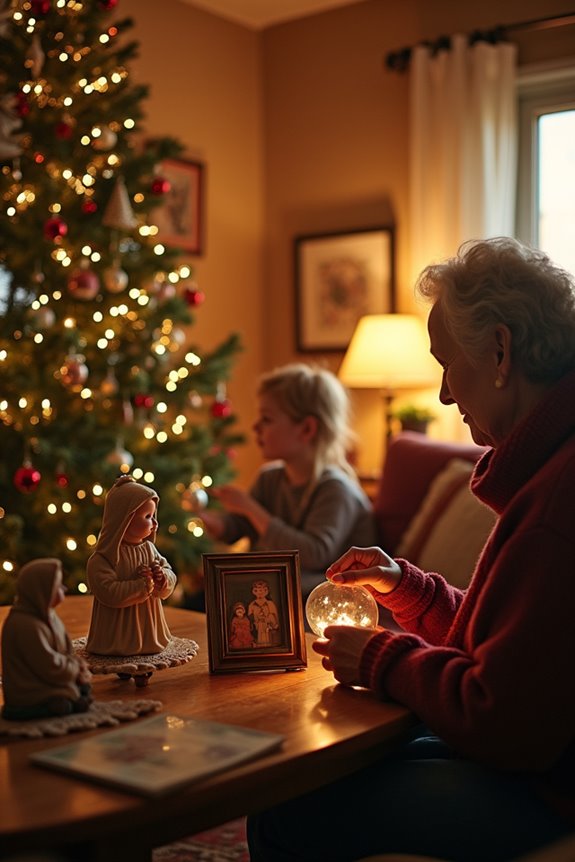
When you pull out those same ornaments each December, something happens—you’re not just decorating; you’re time-traveling! Each bauble carries memories—your kid’s handprint ornament from second grade, your grandmother’s vintage angel. These treasures anchor your family’s identity across years. Decorating together creates rituals that matter. You’re baking cookies in the same kitchen where your parents made them, hanging lights exactly where they hung them. This tradition weaves generations together. Your children watch, learn, and eventually pass these practices to their own families. The act of decorating becomes an experience that recaptures holiday joy. You’re not simply hanging decorations; you’re creating belonging, transmitting seasonal happiness, and connecting meaningful family moments through time.
Why You Copy Your Neighbors’ Holiday Displays?
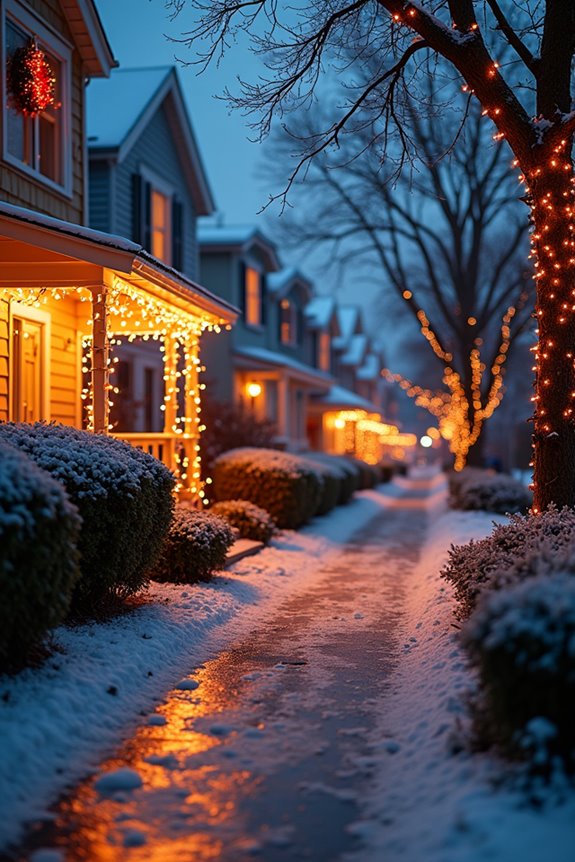
Ever notice how your street suddenly explodes with lights and decorations all at once? You’re not imagining it! When your neighbors hang their displays, you naturally want to join in. This copycat behavior actually strengthens your whole community.
When your neighbors decorate, you naturally want to join in—and that copycat behavior actually strengthens your whole community.
Here’s why you follow their lead:
- You want to belong and fit in with neighborhood traditions
- Seeing decorations inspires your own creative ideas and enthusiasm
- Coordinated displays make your street feel more festive and connected
- Shared holiday cues signal that everyone’s celebrating together
When you mirror your neighbors’ decorations, you’re doing something powerful. You’re creating neighborly interaction and showing you’re part of the community. Well-maintained displays amplify this friendliness even more! Your efforts tell neighbors you’re open and invested in your shared space. Following their example isn’t just copying—it’s building belonging, one string of lights at a time.
Choosing Decorations That Signal You’re Open to Connection
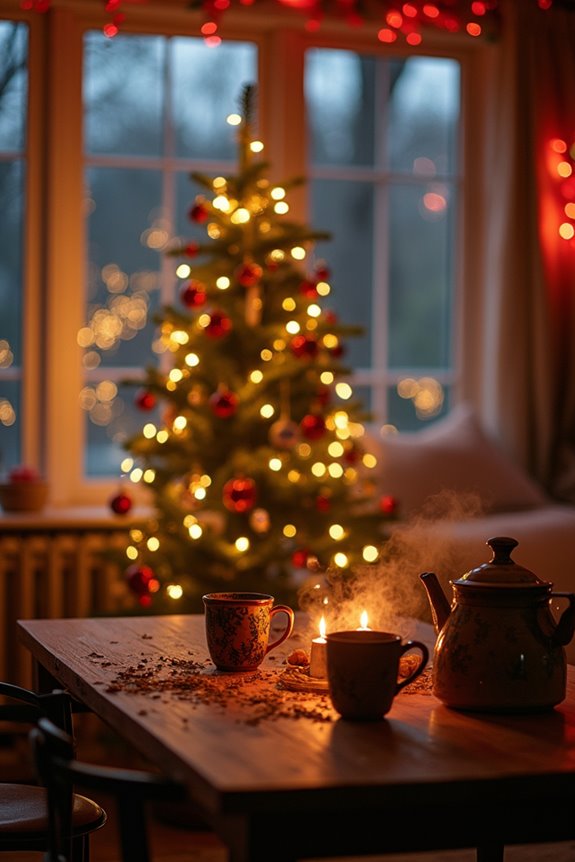
You’ll want to pair your festive decorations with genuine upkeep—a well-maintained yard and clean entryway show neighbors you’re welcoming, not just going through the motions! When your decorations look intentional and cared-for, they signal warmth and openness far more effectively than neglected displays ever could. Make sure your porch is visible and inviting, keep your decorations fresh, and let people see signs of life inside your home, because that combination tells your neighborhood you’re someone worth connecting with!
Decor Paired With Upkeep
How do your holiday decorations look to someone walking past your home?
Decor paired with upkeep sends a powerful message: you’re friendly and welcoming! When your decorations shine alongside a tidy home, neighbors notice. They see someone who cares about community connection. Here’s what matters most:
- Clean entryways with lights or garland draw people in
- Well-maintained landscaping frames your festive displays beautifully
- Visible signs of life—open curtains, swept porches—show you’re approachable
- Coordinated decorations matching your home’s style demonstrate thoughtfulness
Research indicates decorated homes feel warmer when they’re also well-kept. Neglecting upkeep actually undermines your decorations’ friendliness signal. You don’t need elaborate displays; you need intentional ones paired with basic maintenance. This combination fosters neighborhood connections. Even if you haven’t been socially active before, strategic decorating with tidy surroundings changes how others perceive your openness to belonging.
Signaling Warmth Through Visibility
What makes some holiday displays feel like an invitation while others seem closed off? You’re signaling warmth through visibility when you choose decorations strategically. Bright lights near your entryway tell neighbors you’re approachable. A tidy front yard with festive touches says you care about connection!
| Decoration Type | Visibility Impact |
|---|---|
| Entryway lights | Draws people closer |
| Tidy landscaping | Shows you’re welcoming |
| Visible wreaths | Signals openness |
| Well-maintained displays | Boosts friendliness |
| Active porch setup | Encourages interaction |
Your decorations act as social invitations. When you combine neat surroundings with festive decor, you’re practically shouting, “I’m here for community!” These visibility choices matter. You’ll find that neighbors respond to homes that feel lived-in and cared for. Your holiday display becomes a beacon of belonging.
How Religious Symbolism Shaped Modern Holiday Decor
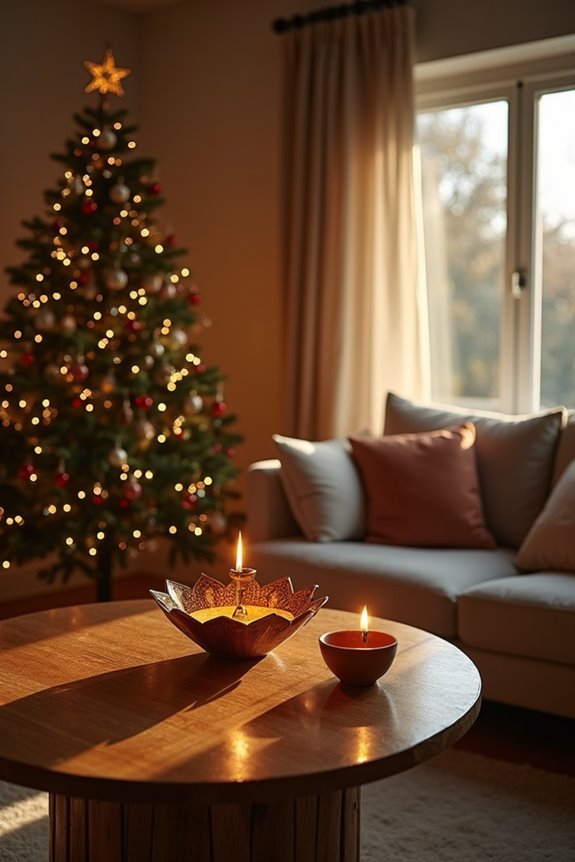
When you look at a decorated Christmas tree today, you’re actually seeing centuries of religious beliefs come to life. Your holiday decorations carry deep spiritual meaning that connects you to generations before you.
- Evergreen branches symbolize everlasting life and God’s eternal presence in your home
- Star toppers represent the Nativity and hope shining through winter’s darkness
- Twinkling lights originated from sacred candles, now symbolizing divine guidance and God’s presence
- Christmas trees shifted from pagan symbols to Christian emblems of rebirth and the Trinity
These aren’t random choices. Early Christians adopted these decorations intentionally, blending old traditions with new faith. When you hang that star or light those strings of bulbs, you’re participating in something meaningful. You’re signaling your connection to faith, renewal, and hope. Your decorations tell a story that matters—a story you’re sharing with everyone who sees them.
The Shift From Candles to Electric Lights and What It Reveals

You’ve probably noticed that holiday trees today sparkle with electric lights instead of flickering candles, and that shift reveals something significant about how we adopt safer, smarter ways to celebrate. Thomas Edison’s team didn’t just invent electric Christmas lights—they fundamentally changed what you could do with holiday decorating, letting you create elaborate displays without worrying about fire hazards or melted wax ruining your home. This innovation shows us that sometimes the best holiday traditions aren’t the oldest ones; they’re the ones that let us celebrate more safely, more brightly, and more creatively than before.
Edison’s Revolutionary Innovation
Imagine stepping into a home lit entirely by flickering candles, then picture the wonder on people’s faces when electric lights suddenly blazed to life on a Christmas tree—that’s the innovation we’re about to explore.
Thomas Edison’s assistants didn’t just invent Christmas tree decorations; they changed how we celebrate together. In 1882, Edward Hibberd Johnson wired 80 red, white, and blue electric lights onto a tree, later expanding to 120 bulbs. Here’s what this innovation meant for us:
- Safety replaced fire hazards from open flames
- Brightness enabled elaborate displays
- Reliability meant decorations lasted longer
- Community excitement grew as neighbors gathered
You experienced a shift from dangerous candlelight to dependable electricity. This wasn’t merely about convenience; it changed our holiday traditions. Electric lights turned Christmas tree decorating into something we could all enjoy safely, sparking the celebrations we treasure today.
Safety And Accessibility Progress
How’d we go from risking our homes to creating safer, brighter celebrations? Before electric lights, you’d light candles on your tree and hold your breath! Those flickering flames looked beautiful, but they terrified families. One gust of wind, one careless moment, and disaster struck. Then came Johnson’s 1882 breakthrough: 80 electric bulbs wrapped around a Christmas tree. You could finally leave your decorations unattended without panic. Electric lights changed how we celebrate. We gained safety without sacrificing beauty. Today, you can deck your halls confidently, knowing your lights won’t catch fire. That shift reveals something deeper about holiday decorating—it’s about bringing communities together safely, letting everyone participate without fear. When we choose electric lights, we’re choosing inclusion and peace of mind.
Why Holiday Decorations Spread Differently Across the World
What makes holiday decorations look so different when you travel across the globe? Cultural adaptation shapes how communities celebrate. Geography, religion, and tradition blend together in distinct ways.
- Regional resources guide choices—you’ll see Norway spruce in Britain, while Greenland imports trees and the Philippines craft handmade parol lanterns
- Religious beliefs influence designs—some regions feature Nativity stars atop trees, others emphasize non-religious lights and festive cheer
- Sacred and secular motifs intertwine—pagan evergreen symbolism shifted toward Christian interpretations across Europe
- Private versus public displays vary—Muslim-majority and secular regions often keep decorations private or focus on general celebration
You belong to a global community sharing warmth differently. From Edison’s electric lights shaping neighborhood traditions to paper-chain lanterns in China, communities have found creative ways to signal presence and connection. Your traditions matter.
The Role of Decorating in Honoring What Your Family Values
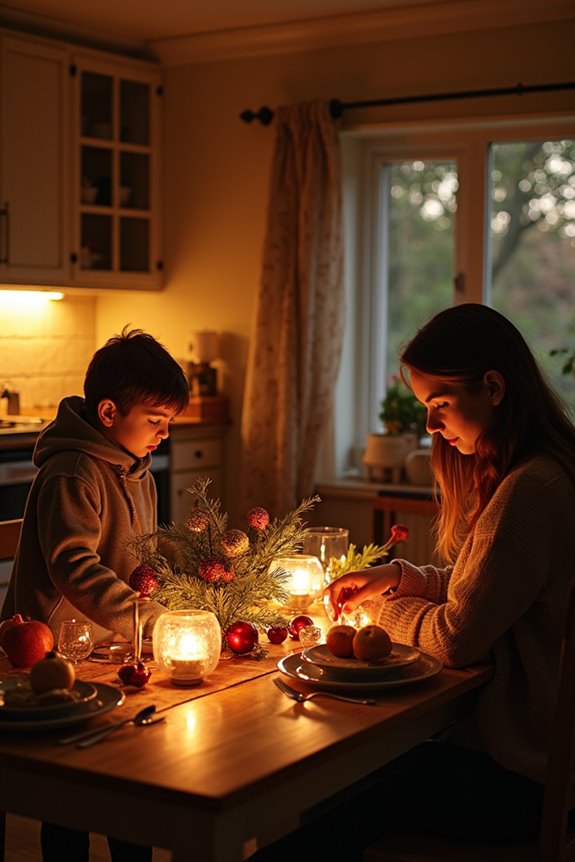
When you deck your halls with ornaments your grandmother gave you or string lights the same way your family always does, you’re not just making things look pretty—you’re showing the world what matters most to you! These rituals and symbols become the language your family speaks, telling your story through tinsel, candles, and carefully placed decorations that communicate your values to everyone who sees them. Your traditions make your home a living record of togetherness, and that holds real weight.
Family Traditions and Rituals
Why do you think decorating feels special when you’re doing it with the people you love most?
When you decorate together, you’re building memories that’ll stick with you forever. Your family’s traditions become the heartbeat of your home. Here’s what makes these rituals so powerful:
- Cookie-making sessions where recipes pass from parent to child
- Tree-trimming nights filled with laughter and inside jokes
- Hanging Christmas decorations that spark stories about years past
- Creating new traditions that your kids’ll someday share with their own families
You’re not just arranging ornaments and lights. You’re weaving your family’s values into every decoration you place. These moments strengthen your bond and remind everyone they belong somewhere special. Your home becomes a reflection of what matters most to you!
Values Reflected Through Symbols
Every decoration you hang tells a story about who you are and what matters most to your family. When you string lights around your home, you’re displaying hope and warmth to everyone who passes by. The evergreen branches you arrange symbolize renewal and everlasting life—values that connect you to something bigger than yourself. Stars crowning your trees represent faith and guidance through dark times. These aren’t random choices. You’re deliberately decorating to show your neighbors and loved ones what your family believes in. The effort you invest in holiday decorating demonstrates your commitment to generosity, hospitality, and shared traditions. Each ornament placed, each light switched on, strengthens your family’s sense of belonging. You’re not just making your home look festive; you’re broadcasting your deepest values and inviting others into your world.
Creating Displays That Reflect Both Tradition and Resilience
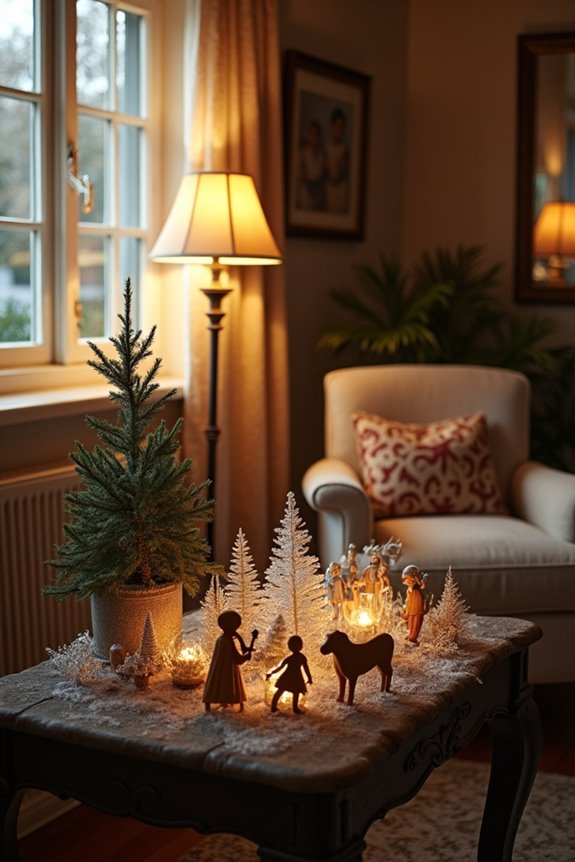
As communities face real challenges—economic strain, social divisions, natural disasters—holiday decorations become powerful statements of hope and continuity. You’re not just hanging lights; you’re declaring resilience. This season, your displays blend familiar traditions with messages of endurance, creating a sense of community that matters.
Consider these ways you can reflect both tradition and strength:
- Pair evergreens with handmade ornaments telling your family’s story
- Mix classic lights with locally inspired decorations reflecting your region
- Display luminarias or desert-adapted decorations honoring where you live
- Pass down meaningful pieces across generations, building continuity
When you decorate, you’re creating visible proof that life persists through darkness. Your efforts foster belonging and optimism. These aren’t just decorations—they’re action-oriented responses to hardship, reminding everyone around you that celebration thrives despite adversity. You’re building something real together.
Making Your Decorations Count in a Divided Neighborhood
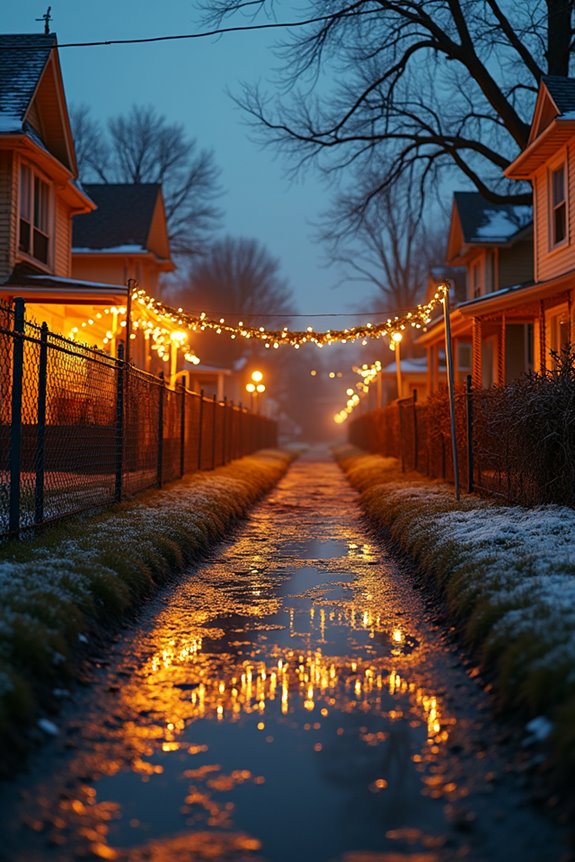
Paired with a well-maintained yard and inviting entryway, your decorations signal warmth. They tell neighbors you’re approachable. Even modest displays help! Coordinate colors or themes with nearby homes if possible. This shared effort strengthens bonds across differences.
Research confirms it: decorated neighborhoods feel more connected. Your effort isn’t just about aesthetics—it’s about belonging. You’re creating space for connection, one decoration at a time. That matters.