
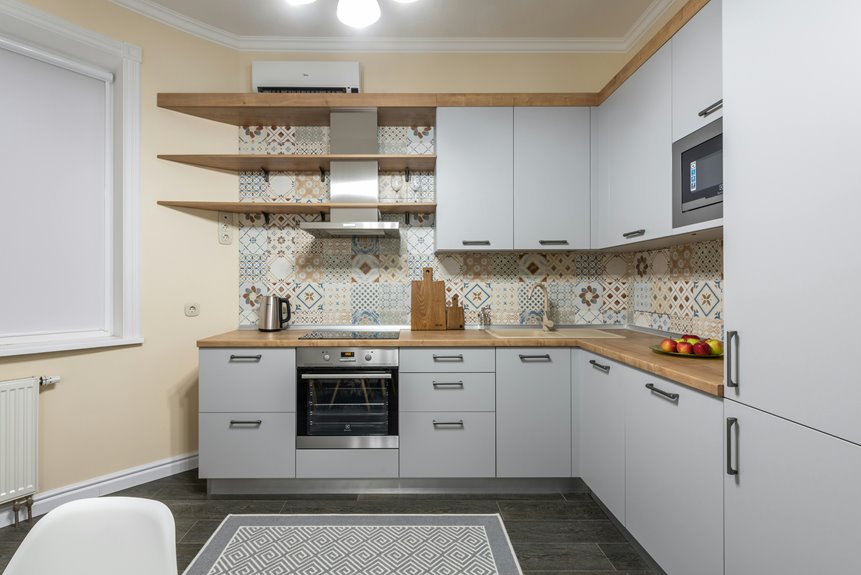
Your ideal kitchen layout matches your space size and cooking style. Small kitchens work well with galley or single-wall designs that keep everything within arm’s reach. Medium spaces benefit from L-shaped layouts offering flexible work zones. Larger kitchens provide maximum storage with U-shaped designs. Open-plan living works with island-centered kitchens as a central point.
The key? Honestly assess whether you cook solo or with family, then mentally walk through your daily routine in that space. Stick around to discover how each layout works for your cooking needs.
Choose Your Layout: A Decision Framework Based on Your Needs and Space
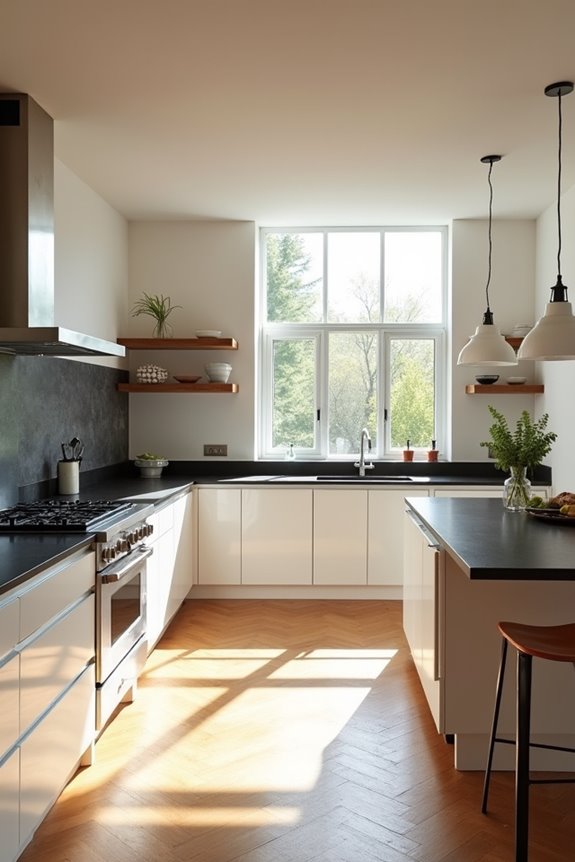
How do you know which kitchen layout will work for your space? Start by honestly assessing your kitchen’s size and how you cook. Small kitchen design works well with single-wall layouts, keeping everything reachable without overwhelming your space. Larger kitchens? An island brings practical benefits—it anchors the room and creates natural work zones. The working triangle—connecting your fridge, sink, and stove—remains your efficiency foundation. Consider plumbing constraints and appliance placement early; these decisions shape everything else. Measure your clearances carefully. You’ll want at least 1000 millimeters between counters, ideally 1100–1200 millimeters for comfort. Think about whether multiple people cook simultaneously. The work zones method organizes tasks into dedicated areas, reducing unnecessary travel. Your space planning deserves this thoughtful approach—you’re building your kitchen’s future.

GREAT SPACE SAVER: The kitchen organization and storage cabinet is moveable, you can use it turned like a 3 tier rustic corner shelf or you can straighten it out and use it as a regular tiered shelf. Versatile design can surprise your by adding about 30% more space for your countertop.

Multifunctional Countertop Organizer:2 tier counter shelf rack can be used in different places,such as living room, bathroom, bar counter, kitchen, and office desktop. Wooden desk shelf can organize coffee accessories, tea bags, snacks, office supplies, makeup,spice jars,and small plants etc.
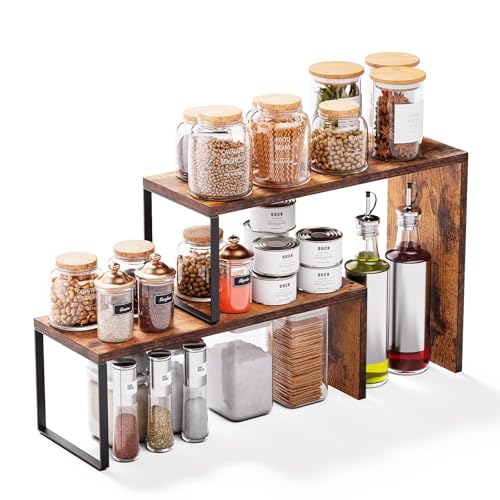
[ Easy to Assemble ] The cabinet storage rack is made of durable wood and metal.The simple structure and pre-drilled holes of the small shelf make its assembly easy.The hardware packet includes screws, allen wrench and an instruction manual.Durable and sturdy enough for kitchen appliances or daily use items.This countertop organizer comes with little rubber self-adhesive feet to protect your table surface and prevent sliding
Small Spaces: Galley and Single-Wall Kitchens for Maximum Efficiency
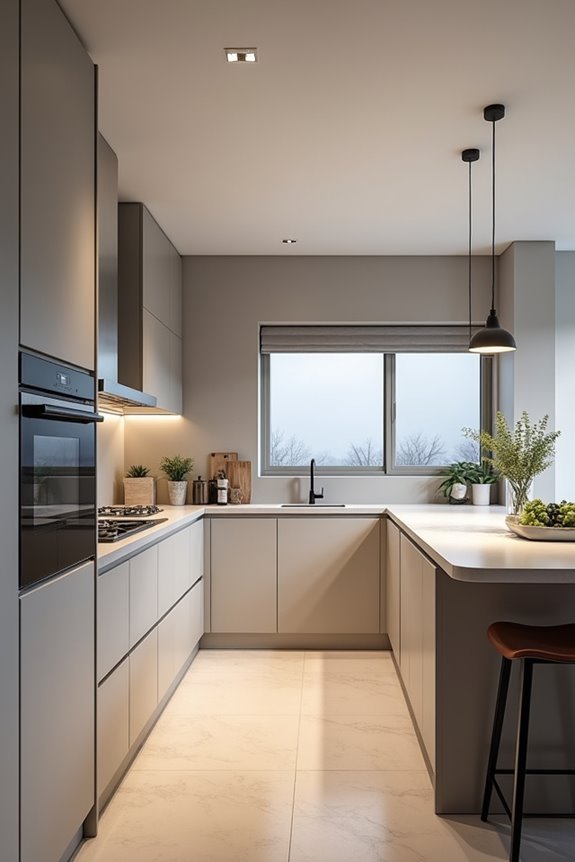
If you’re working with a small kitchen, consider two efficient layouts: the single-wall design keeps everything in one neat line, and the galley kitchen puts your prep zone on one side with your cleanup area directly across, creating a logical workflow. Both designs reduce wasted steps and crowding, so you can focus on cooking rather than maneuvering around obstacles. They’re straightforward, practical designs that maximize your available space.

Space-Saving and Organized Storage: Designed as a pantry door organizer and hanging storage baskets organizer, this wall mount rack maximizes space efficiency in any room. Keep your kitchen, pantry, bathroom, or shower clutter-free and organized.

Stable Guardrail & Wider Adhesive Stickers - Our spice rack organizer for cabinet door added side guards and improved two-in-one wider adhesive stickers for increased safety and stability. The adhesive spice racks have guard rails prevent spice from falling, while the wider and stronger stickers provide extra protection and peace of mind in your busy kitchen

WALL MOUNT RACK: 3 Tier rack with fixed shelves measuring 5 in. D x 18 in. W
Single-Wall Layout Benefits
Why do so many small kitchens work well with everything lined up along one wall? A single-wall kitchen layout maximizes your space efficiency. This galley-style arrangement keeps your fridge, sink, and stove within arm’s reach, creating an efficient work triangle that cuts walking distances significantly.
Here’s what makes this kitchen layout effective:
- Reduced walking distance between appliances saves you steps and energy during meal prep
- Open sightlines let you see your entire workspace at once, making cooking feel less cramped
- Accessible storage stays within reach when you organize shelves strategically near your sink and dishwasher
- Clear traffic flow prevents congestion since everything concentrates along one wall
This straightforward approach makes tight quarters into functional, welcoming cooking spaces.
Galley Kitchen Workflow Optimization
While the single-wall layout does wonders for tiny spaces, a galley kitchen takes efficiency even further by giving you two parallel countertops instead of one. This setup streamlines your workflow by maintaining 1000–1100 mm clearances between counters, creating a comfortable passage that avoids cramping. Position your sink and stove along these parallel runners to keep dishware handling minimal and prep work within arm’s reach. Place your refrigerator at one end and your oven at the opposite end, balancing traffic flow effectively. This arrangement optimizes your work triangle. Smart storage solutions like pull-out shelves and vertical organizers maximize your narrow kitchen’s potential. You’ll have an efficient space designed for your cooking needs.
Medium Spaces: L-Shaped Kitchens for Flexible Work Zones
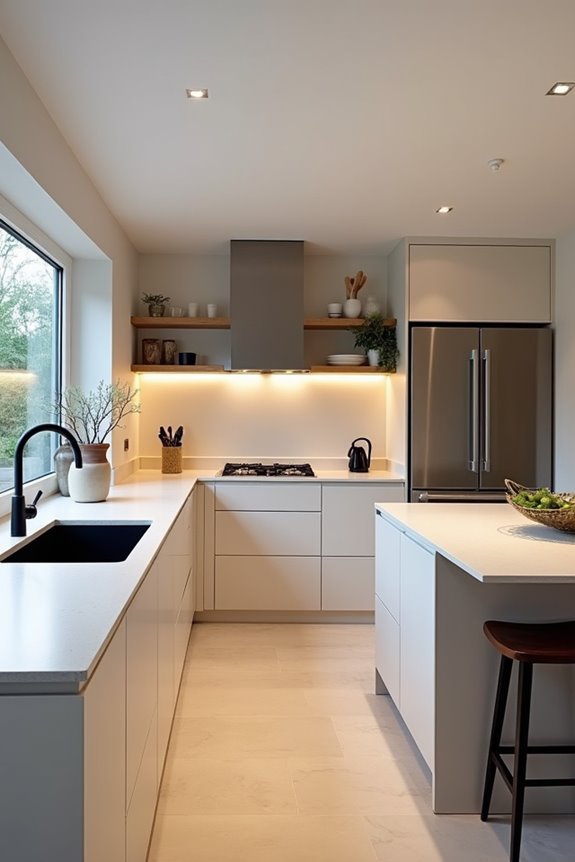
How’s this for a kitchen approach: the L-shaped layout works well in medium spaces because it gives you the best of both worlds! This design combines smart storage with open, flexible work zones that let you prep, cook, and clean without feeling cramped.
What makes an L-shaped kitchen effective:
- Efficient work triangle: Your fridge, sink, and stove form a practical triangle, cutting down unnecessary walking
- Dual wall storage: Both walls hold cabinets and appliances, maximizing every inch you’ve got
- Open sightlines: You can watch the living room while you’re cooking, staying connected to family
- Island-ready: Add a compact island or peninsula to create four distinct zones for all your tasks
You get solid workflow without sacrificing comfort or connection!

1️⃣ Tall 14" Shelves - 📚 Five tall 14" shelves fit books, plants, and décor in one clean, organized space—great for small apartments or plant corners. Reinforced shelves stay stable for years, giving you a reliable corner bookshelf or plant stand.

EFFORTLESS KITCHEN CORNER COUNTERTOP ORGANIZER: Transform your kitchen with this versatile kitchen countertop organizer, ideal for spices, utensils, and small appliances. Whether used as a counter shelf organizer, or corner spice rack for countertop, this kitchen counter organizer provides sturdy construction and a sleek design. It offers easy installation, larger storage capacity, and an elegant solution for any kitchen counter stand space.

EASY TO ASSEMBLE & CLEAN: This kitchen storage rack uses a self-invented installation technology(Patent No: US 12,595,816 B1), allowing for easy assembly in just 2 minutes without any tools. For cleaning, simply wipe it with a damp cloth.
Larger Spaces: U-Shaped Kitchens for Storage and Flow
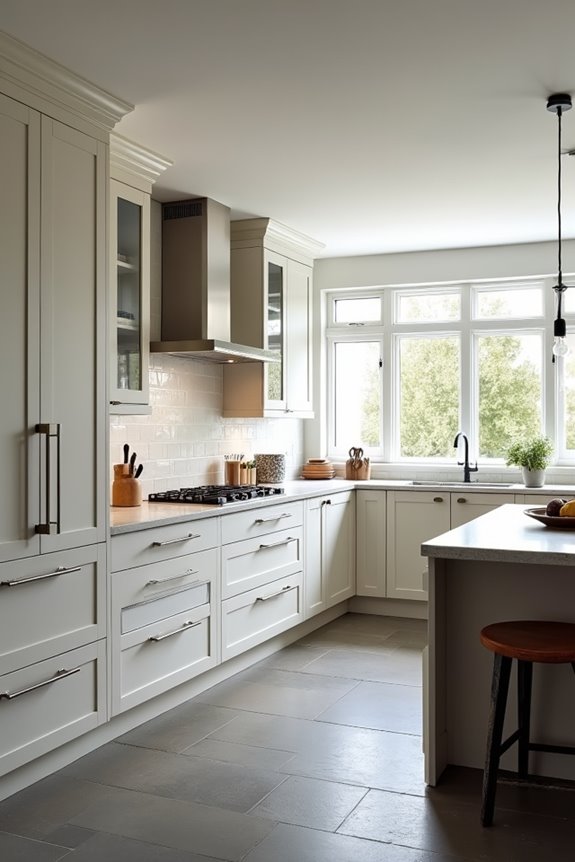
When you’ve got the square footage to work with, a U-shaped kitchen becomes your storage powerhouse! You’ll wrap cabinetry around three walls, creating ample space for everything from small appliances to your favorite cookware. This layout delivers serious storage efficiency without feeling cramped or cluttered.
Here’s what makes it work: your working triangle shrinks, meaning you’ll walk less between your sink, range, and fridge. You’re building a kitchen that functions as hard as you do! The U-shape supports an island or seating area on the open side, giving your family a natural gathering spot.
Just remember, you’ll need roughly 12–15 feet of wall space to pull this off comfortably. With thoughtful ventilation and electrical planning, your workflow becomes straightforward. You’re creating a kitchen where everything’s within reach!

No Adhesive, No Drilling, No Damage: unlike sticky cabinet locks that may leave residue, peel paint, or damage wood finishes when removed, these 10 pcs U-shaped baby cabinet locks require no adhesive, screws, tools, or drilling; A smart choice for renters, new cabinets, painted furniture, and parents who want child proofing without permanent marks

Baby Proofing, Baby Protection - Curious little hands can get into cleaning supplies, sharp tools, and other hazards fast. These sliding cabinet locks add a simple, reliable barrier to help keep cabinets and drawers closed when you’re not looking.

【Easy to use】Adopting advanced unlocking methods, it is easy for adults to unlock according to the instructions. But children or pets are not easy to open. (Note: Please do not unlock in front of children, otherwise children may learn).No tools are required for installation, no drilling is required, and there is no need to worry about screws or adhesive glue anymore. They will not leave any marks, protecting the integrity of your cabinet.
Open-Plan Living: Island-Centered Kitchens as the Room’s Anchor
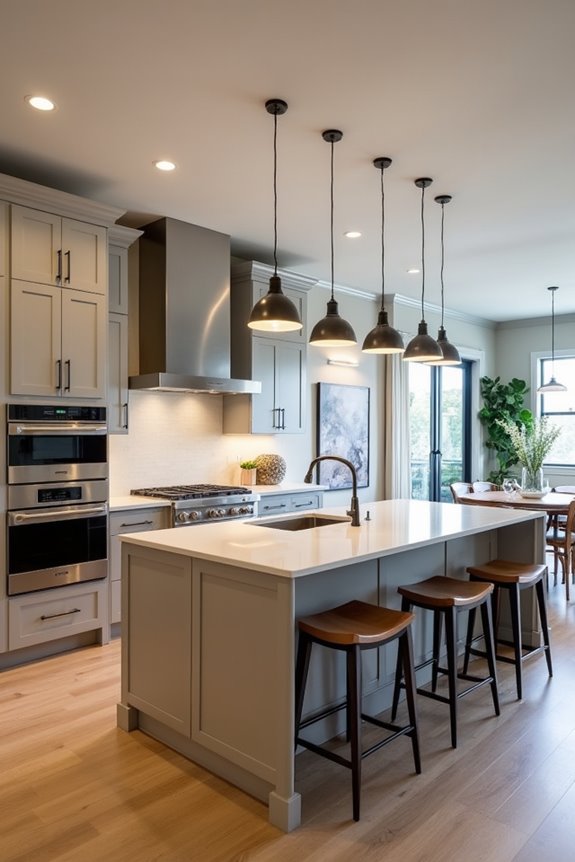
When you’re designing an open-plan kitchen, a well-placed island becomes your room’s visual centerpiece—it anchors the space, draws people in, and creates that natural gathering spot we all crave! Your island does the heavy lifting by pulling the eye across the room while keeping cooking, dining, and living areas connected and flowing together. You’ll find that a thoughtfully designed island with prep zones, seating, and smart storage turns an open layout into a functional hub instead of just an empty, disconnected space.

[Island Lights with E26 Base] These pendant light fixtures are compatible with various E26 base light bulbs. Each fixture can support three bulbs, with a maximum power of 60W each. They are also dimmer-compatible, offering flexibility to adjust the brightness to suit different installation scenarios. (Bulbs not included)

Perfect for Medium Kitchen Islands: This 4-light island light (31 inches long) is perfect for kitchen islands ranging from 4 ft to 4.5 ft (48 -54'') in length, clear glass collocation with four 2700K-3000K color temperature E26 bulbs (bulbs not included) illuminates the work area
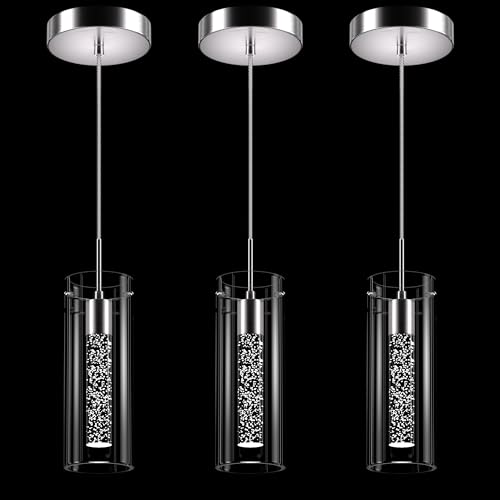
Modern Pendant Lights: Simple design line, graceful taste, Esfos pendant light for kitchen island is eye-catching and can suit almost all kinds of home styles. Brushed nickel finish, clear glass shade and mimicking champagne bubbles frozen in ice, this crystal pendant light fixture can create a modern charm glow to illuminate your house.
Island as Visual Anchor
Why does an island in the middle of your kitchen work so well? It becomes your room’s true anchor, changing how you cook and connect with loved ones. Your island creates natural zones for prep work, cooking, and socializing without walls dividing your space. This open-concept setup lets you stay engaged while preparing meals.
Island anchor benefits:
- Defines separate cooking, prep, and entertaining zones visually
- Keeps circulation clearance at 39–47 inches for comfortable movement
- Supports perimeter cabinetry that holds your main appliances and storage
- Preserves sightlines to your dining and living areas
Thoughtful ventilation planning and proper electrical connections help your island function well. You’ll move less, cook more efficiently, and never miss conversations happening nearby. That’s what a well-positioned island accomplishes.
Open Layout Flow Integration
Your island doesn’t just sit there looking pretty—it’s the heartbeat that connects your kitchen to the rest of your home. An island-centered layout creates open-plan flow that lets you cook while chatting with family in the living room. You’ll want to organize your prep zones strategically around the island to minimize unnecessary steps. Maintaining proper walkway clearance—about 1000–1100 mm on each side—keeps traffic moving smoothly without creating bottlenecks. Positioning your cooking zone, prep area, and cleanup station around the island dramatically improves how multiple people work together. Kitchen ventilation placement directly impacts your island’s functionality. When you design thoughtfully, your island becomes the welcoming hub that makes your entire home feel connected and inviting.
Kitchen Workflow Methods: Working Triangle vs. Work Zones Explained
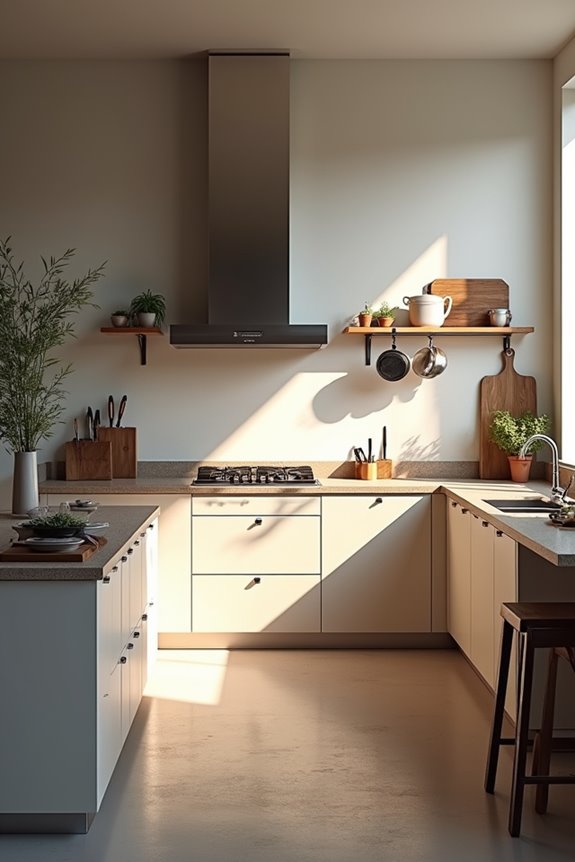
How do you want your kitchen to work—for just you, or for the whole family cooking together?
Your kitchen workflow choice matters! The working triangle organizes around your refrigerator, sink, and stove with 4 to 9-foot sides, creating efficient task flow for solo cooks. Work zones, meanwhile, group activities into separate stations that support multiple people cooking simultaneously.
The working triangle maximizes solo efficiency; work zones support multiple cooks sharing your kitchen space.
Consider your lifestyle:
- Solo cooking: The working triangle minimizes walking and maximizes efficiency with focused movement patterns
- Family meals: Work zones let everyone prep, cook, and clean without bumping into each other
- Open layouts: Zones adapt better to modern spaces where triangles simply don’t fit
- Hybrid approach: Combine both methods by establishing zones within your triangle for better kitchen efficiency
Choose what matches your cooking reality. You’ll find rhythm in your space.

EFFORTLESS KITCHEN CORNER COUNTERTOP ORGANIZER: Transform your kitchen with this versatile kitchen countertop organizer, ideal for spices, utensils, and small appliances. Whether used as a counter shelf organizer, or corner spice rack for countertop, this kitchen counter organizer provides sturdy construction and a sleek design. It offers easy installation, larger storage capacity, and an elegant solution for any kitchen counter stand space.

BIGGER SIZE and LARGER CAPACITY: We have carefully crafted this upgraded 3-tier large capacity Kitchen Spice Rack, which can provide more ample storage space, keep your items organized and easy to access

Double-layer Design: Measuring 13.25 x 7.5 x 13.75 inches, this spice rack features a two-tier structure that maximizes storage capacity while occupying minimal counter space. Its two separate compartments help you save vertical space
Apply Your Layout: How Cooking Habits and Daily Routines Guide Your Choice
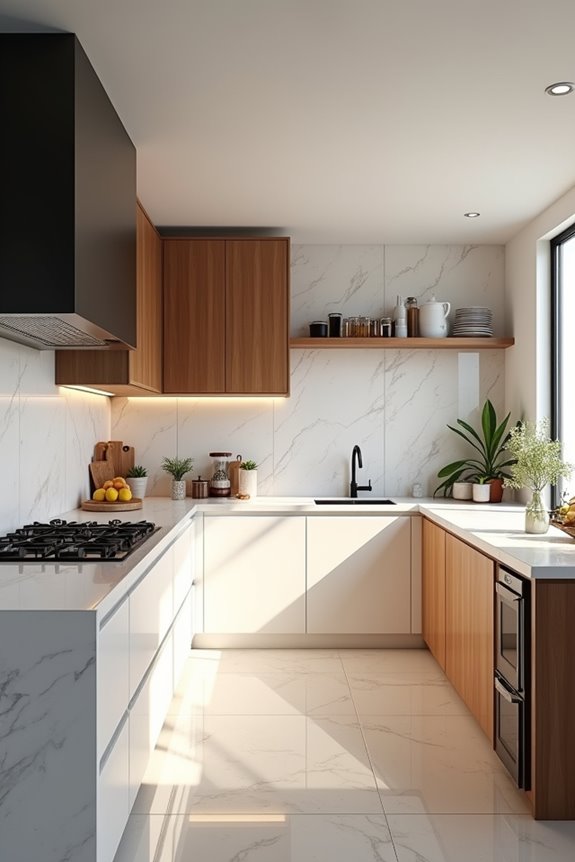
Solo cooks thrive with compact island designs that keep everything within arm’s reach. Multiple cooks need work zones that let you operate simultaneously without bumping elbows. Consider your routine honestly. If you’re constantly grabbing pots and pans, position your prep zone near the stove. Keep frequently used pantry items adjacent to minimize frustrating transfers.
Your small kitchen design works best when it matches your real life. Walk through your planned layout mentally, imagining typical cooking days. This realistic testing reveals sightlines and circulation patterns before you finalize placements. You’ll spot problems early, allowing efficient movement to become second nature.

Utensil Rack: including 1 stainless steel cutlery rack, 14hooks.
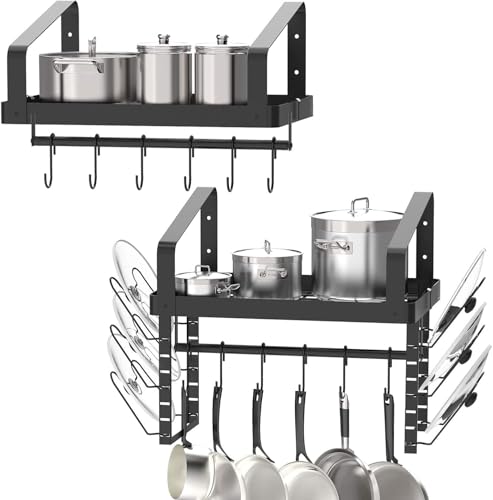
【Large Storage Capacity】-- Set of 2 pan organizer with 12 removable hooks ,there is enough storage place for even the most enthusiastic culinary lovers.2 large grid shelf measuring make you can store and display all your favorite cookwares on the racks,and hang the pots and pans by hooks.

HEIGHT ADJUSTABLE: X-cosrack wall mounted spice rack can be adjusted up and down according to the height of jars; Mention that the 4.6-inch-wide basket is designed to fit larger items, such as big bottles and cans, providing compatibility with a wide range of kitchen essentials.